The Real Question Is How Suddenly It Strikes
Agricultural markets are behaving as though risk has disappeared at precisely the moment global uncertainty is rising. That contradiction was front of mind last month at the 2026 Farming Conference at Trinity Park, Ipswich, themed “Fields of Opportunities in a Climate of Change,” which brought together more than 350 farmers, advisers, policymakers, and industry specialists to examine how farm businesses can remain profitable, resilient, and adaptable in a rapidly shifting environment.
The event was notable not just for turnout but for tone. Rather than dwelling on challenges alone, speakers focused on practical solutions and strategic thinking. Headline speaker Professor David Hughes opened with a global overview of food and retail trends, highlighting how changing consumer expectations, retailer consolidation and supply-chain pressures are reshaping where value sits in agriculture. Food policy specialist Tim Lang followed with a stark assessment of food security risks, arguing that recent shocks from conflict to logistics disruption, have exposed structural fragilities in global supply systems and strengthened the case for shorter, more regionalised supply chains.
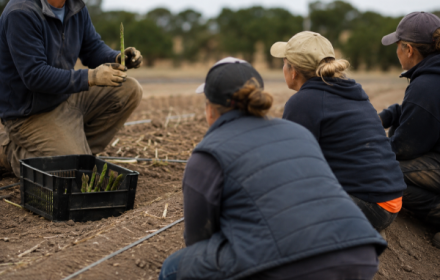
Across the day, sessions explored themes ranging from climate resilience and natural capital to renewable energy integration, labour efficiency, and collaborative business models. Farmers shared real-world case studies on diversifying income streams, improving input efficiency and adopting technology to manage volatility. The recurring message was clear, resilience is increasingly built through cooperation, whether machinery sharing, marketing alliances or data exchange rather than through scale alone. That practical emphasis made the conference less a talking shop and more a strategic toolkit for navigating change.
Several of the discussions prompted me to think about where agriculture currently sits within wider macro markets, particularly given the prevailing gloom surrounding commodity prices and farm profitability.
Global risk is elevated and deeply uncertain, yet agricultural commodities appear largely indifferent, a historically unusual pattern. Equity markets continue to grind higher, seemingly unfazed by geopolitical tension or economic fragility. Valuations look stretched, yet capital keeps flowing. At the same time, gold and silver are pushing toward fresh highs, quietly signalling that beneath the surface optimism there is a growing undercurrent of caution. Capital does not move into hard assets without reason.
Geopolitically, the backdrop is increasingly unstable. War risks are no longer tail events; they are part of the baseline and sit at arguably their highest level since the Cold War. Trade routes, energy supply, and global food security all feel more fragile than markets appear willing to price in. Even symbolic indicators are flashing warnings: the Doomsday Clock now sits closer to midnight than at any point in its history. Dramatic, perhaps, but it reflects the broader truth: uncertainty is rising, not falling.
Against that backdrop, agriculture sits at the opposite extreme. Grain and oilseed markets are priced as though none of this matters, as if supply chains are permanent, weather is reliable and producers can absorb losses indefinitely. In real terms, many agricultural commodities are trading near long-term lows while most of the wider economy has already “levelled up” through inflation.
That disconnect is unlikely to be sustainable. Agricultural markets have always moved in long, painful cycles. Periods of depressed prices tend to last far longer than seems rational, then end far faster than feels comfortable. Low margins change behaviour, acreage tightens, investment is deferred, risk tolerance shrinks. Gradually the system becomes brittle. When the shock finally arrives, prices do not drift higher, they reset.
What stands out today is how little slack appears to exist beneath the surface. Stocks may look comfortable on paper, but they sit within a world that is more volatile, politicised, and interconnected than at any point in recent decades. Inflation has already repriced labour, energy, metals, and capital. Food production has not. Historically, that gap does not close quietly, it closes through abrupt revaluation, often triggered by something obvious only in hindsight, be it weather, policy, conflict, or a sudden shift in confidence.
This is not a call for an imminent market reversal. Cycles rarely announce themselves cleanly, and markets can remain irrational longer than producers can remain solvent. But it increasingly feels as though agriculture is late in a down-cycle rather than trapped in a permanent new normal.
Analysis of historical price charts for global grains all show the same picture. Prices have fallen to the bottom of long-term uptrends going back some 30 years and whilst they may remain around these levels for longer than is comfortable, it would suggest that the prospect of further significant downside is limited.